
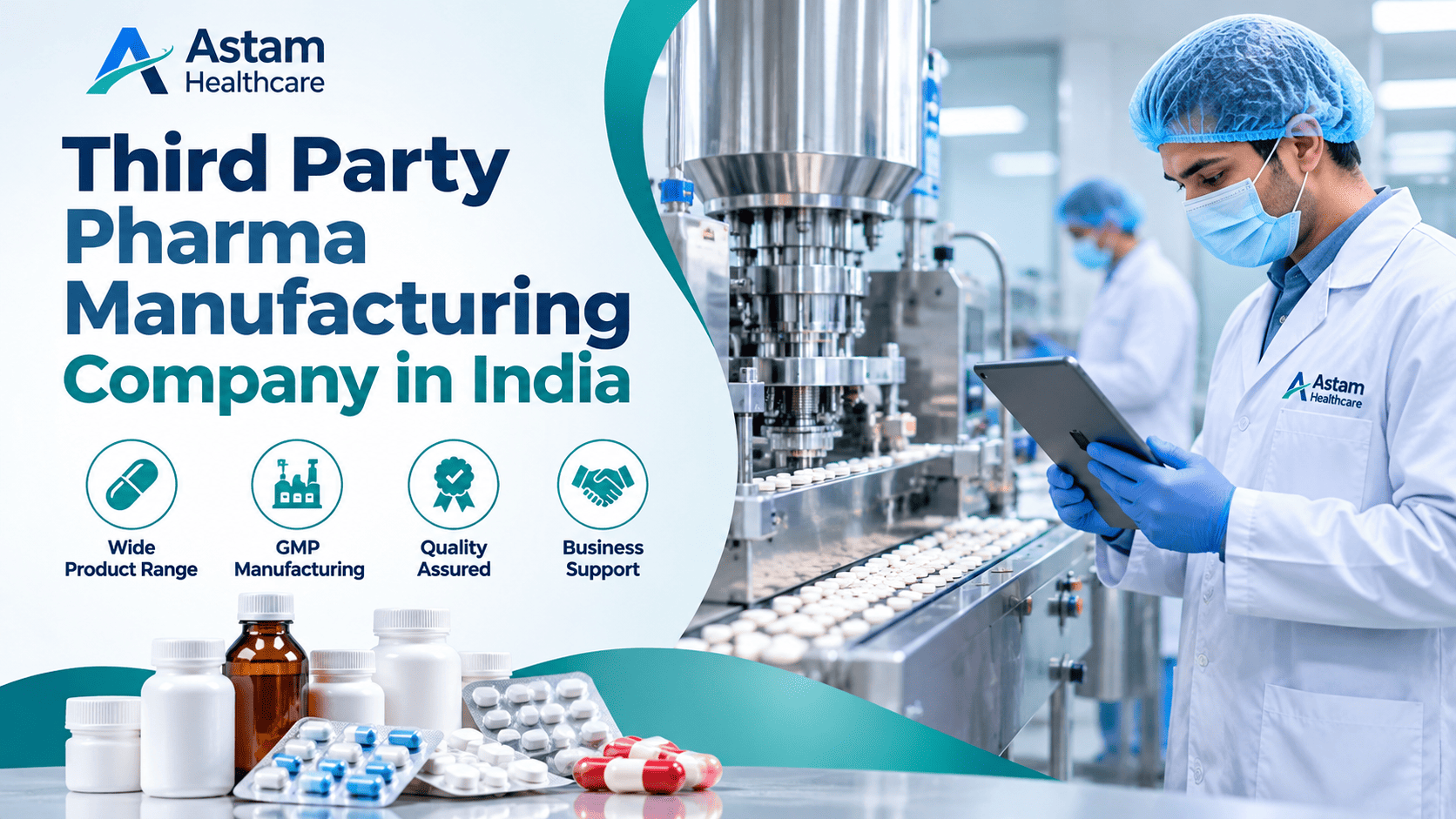
Third Party Pharma Manufacturing Company in India: Services, Process and Checklist
India's pharmaceutical industry creates opportunities for entrepreneurs, distributors and pharmaceutical marketing companies looking to introduce their own medicine brands. However, establishing a pharmaceutical manufacturing plant requires substantial investment in infrastructure, machinery, technical personnel, regulatory approvals and quality-control systems.
For businesses that want to expand their product portfolio without setting up an independent manufacturing facility, third-party pharmaceutical manufacturing can be a practical option.
Working with a reliable third party pharma manufacturing company in India allows businesses to concentrate on branding, distribution and business development while manufacturing activities are managed through appropriately licensed facilities.
Astam Healthcare Pvt. Ltd. presents third-party pharmaceutical manufacturing as part of its business offerings and provides access to a diverse pharmaceutical product portfolio. Businesses interested in manufacturing arrangements can discuss their product requirements, packaging preferences and commercial needs with the company.
What Is Third Party Pharma Manufacturing?
Third-party pharma manufacturing is an arrangement in which a pharmaceutical company gets medicines manufactured through another appropriately licensed manufacturer. The marketing company generally manages branding, distribution and sales, while the manufacturing partner performs the agreed production activities.
For example, a pharmaceutical business planning to launch tablets, capsules or syrups under its own brand may explore manufacturing through an existing production facility instead of establishing a separate plant.
The exact responsibilities depend on the manufacturing agreement, product approvals, licensing requirements and applicable regulatory provisions.
Businesses can explore Astam Healthcare's pharmaceutical product range to understand the different products and categories listed by the company.
Benefits of Third Party Pharma Manufacturing in India
1. Reduced Infrastructure Investment
Establishing a pharmaceutical manufacturing facility requires investment in premises, equipment, laboratories, qualified personnel and regulatory compliance. A third-party arrangement can reduce the need for these upfront investments, although businesses must still budget for product development, packaging, testing, inventory and marketing.
2. Access to Manufacturing Expertise
Qualified manufacturing facilities have processes for raw-material handling, production, in-process controls, quality testing and documentation. Working with a suitable manufacturing partner can provide access to these capabilities without developing every process independently.
3. Product Portfolio Expansion
Third-party manufacturing may help pharmaceutical businesses expand into additional therapeutic categories, subject to the manufacturer's approvals, facilities and available production capacity.
For example, companies can explore product categories such as Cardiac and Diabetic Products or Gynaecology Products when evaluating potential portfolio expansion.
4. Greater Focus on Marketing and Distribution
When manufacturing responsibilities are clearly defined, pharmaceutical marketing companies can focus more attention on distributors, healthcare professionals, customer relationships, product promotion and inventory planning.
5. Flexible Business Development
Outsourced manufacturing may make it easier to evaluate additional products without immediately developing new manufacturing infrastructure. However, commercial feasibility depends on minimum order quantities, pricing, technical requirements and market demand.
Third Party Pharma Manufacturing Services at Astam Healthcare
Astam Healthcare operates in the pharmaceutical sector with a portfolio spanning different therapeutic categories and dosage forms. Businesses considering third-party manufacturing can discuss the following product segments according to their requirements.
Actual manufacturing availability, facility approvals, product specifications and minimum order quantities should be confirmed directly with the company before placing an order.
Tablet and Capsule Manufacturing
Tablets and capsules are widely used pharmaceutical dosage forms. Important considerations include formulation composition, strength, raw-material specifications, manufacturing feasibility, stability and packaging requirements.
Interested businesses can review Astam Healthcare's available pharmaceutical products before discussing specific manufacturing requirements.
Syrup and Liquid Formulations
Liquid pharmaceutical formulations require attention to ingredient compatibility, microbiological quality, packaging materials, storage conditions and product stability.
Businesses interested in this category can explore the company's Syrup Product Range and discuss formulation availability.
Dermatology and Topical Products
Dermatology products may include creams, ointments, gels and other topical formulations. Manufacturing considerations include formulation consistency, stability testing, packaging compatibility and applicable quality specifications.
Explore Astam Healthcare's Dermatology Product Range for relevant portfolio information.
Gynaecology Products
The gynaecology segment covers pharmaceutical products developed for different women's healthcare requirements. Businesses should verify approved formulations, product specifications and manufacturing capabilities before selecting products.
Astam Healthcare's Gynaecology Product Range provides information about this therapeutic category.
Cardiac and Diabetic Products
Cardiovascular and metabolic healthcare products represent an important pharmaceutical segment. Product development and manufacturing require appropriate quality systems, approved formulations and relevant documentation.
Businesses exploring this category can review the company's Cardiac and Diabetic Product Portfolio.
Nutraceutical Products
Nutraceutical products can provide opportunities for pharmaceutical businesses interested in diversifying their portfolios. However, licensing, labelling and permitted claims may differ from those applicable to pharmaceutical medicines.
Businesses can explore Astam Healthcare's Nutraceutical Products and verify the applicable regulatory requirements.
Third Party Pharma Manufacturing Process in India
Step 1: Prepare Your Product Requirements
Start by creating a clear list of pharmaceutical products you want to manufacture. An effective enquiry should include:
- Product name and proposed composition
- Dosage form and strength
- Estimated order quantity
- Packaging requirements
- Proposed brand name
- Target market
- Expected delivery schedule
Step 2: Confirm Manufacturing Feasibility
The manufacturing partner should verify whether the proposed formulations are covered by applicable licences, approvals, technical capabilities and production capacity. A general manufacturing licence does not automatically authorise every product.
Step 3: Discuss Pricing and Minimum Order Quantity
Request a written quotation covering product specifications, minimum order quantity, manufacturing charges, packaging costs, applicable taxes, payment terms and expected production timelines.
Step 4: Finalise Branding and Packaging
Packaging should be reviewed for product information, brand details, mandatory declarations and applicable labelling requirements. Trademark considerations and responsibilities for artwork approval should be clarified before printing.
Step 5: Manufacturing and Quality Control
Production should follow appropriate documented procedures and applicable regulatory requirements. Quality-control processes may include raw-material testing, in-process checks, finished-product testing and batch-release documentation.
Step 6: Packaging, Dispatch and Delivery
After product release, finished goods are packed and dispatched according to agreed commercial terms. Businesses should confirm required documentation, storage conditions, transport arrangements and delivery commitments.
For product-specific enquiries, businesses can contact Astam Healthcare through its official contact page.
Checklist for Choosing a Third Party Pharma Manufacturing Company in India
Selecting a pharmaceutical manufacturing partner should involve regulatory, technical and commercial evaluation. The following checklist can help businesses compare prospective suppliers.
| Important Factor | What Should Be Checked? |
|---|---|
| Manufacturing Licence | Valid licence covering the relevant products |
| GMP Compliance | Applicable GMP requirements and supporting records |
| Product Availability | Approved formulations, dosage forms and strengths |
| Quality Control | Testing arrangements and batch-release procedures |
| Minimum Order Quantity | Product-wise MOQ and batch feasibility |
| Packaging | Available configurations and artwork approval |
| Pricing | Written quotation and additional charges |
| Documentation | Required manufacturing and quality records |
| Delivery | Production lead times and dispatch arrangements |
| Business Support | Communication and clearly defined responsibilities |
This checklist can help pharmaceutical entrepreneurs make informed decisions instead of selecting a manufacturing partner solely on the basis of price.
Regulatory Compliance and Pharmaceutical Quality Standards
Pharmaceutical manufacturing in India is governed by applicable provisions of the Drugs and Cosmetics Act, 1940, the Drugs Rules, 1945, and relevant amendments.
Good Manufacturing Practices are important for maintaining manufacturing quality, documentation, facility standards and production controls. The applicable Schedule M requirements should be reviewed according to the product and manufacturing arrangement.
Businesses should verify the relevant manufacturing licences, product approvals, quality documentation and manufacturing-site details before placing an order.
For official regulatory information, consult the Central Drugs Standard Control Organisation (CDSCO).
How Much Does Third Party Pharma Manufacturing Cost?
There is no single manufacturing price applicable to every pharmaceutical formulation. The final cost depends on several technical and commercial factors.
- Raw-material specifications and pricing
- Product composition and dosage strength
- Manufacturing complexity
- Batch size and order quantity
- Packaging materials and printing
- Quality testing requirements
- Transportation charges and applicable taxes
Two manufacturers may offer different quotations for a similar product because their packaging configurations, testing requirements and order quantities differ.
For a meaningful comparison, pharmaceutical businesses should request detailed quotations that clarify the total commercial cost.
Why Consider Astam Healthcare for Third Party Pharma Manufacturing?
Choosing a suitable manufacturing partner requires attention to product availability, quality standards, regulatory documentation, communication and business requirements.
Astam Healthcare Pvt. Ltd. promotes third-party pharmaceutical manufacturing among its business offerings. Its product portfolio includes different therapeutic segments such as antibiotics, gynaecology, dermatology, cardiac and diabetic care, and nutraceuticals.
Businesses can review the company's pharmaceutical product portfolio before discussing specific manufacturing requirements.
Important points to discuss include:
- Required formulations and strengths
- Product-wise manufacturing feasibility
- Packaging and branding requirements
- Minimum order quantities
- Manufacturing and quality documentation
- Production and delivery schedules
- Commercial terms and payment arrangements
Manufacturing approvals, facility capabilities and commercial commitments should be confirmed directly before finalising an order.
Common Mistakes to Avoid When Selecting a Manufacturing Partner
Choosing a Supplier Only on Price
Manufacturing cost matters, but quality systems, documentation, technical capability and delivery reliability should also influence the decision.
Ignoring Regulatory Requirements
Before selecting products, businesses should verify the licences and approvals relevant to the specific manufacturing arrangement.
Finalising Packaging Without Review
Incorrect labelling or incomplete packaging information may lead to delays, additional expenses or regulatory concerns.
Placing Large Orders Without Market Research
Ordering excessive inventory without understanding expected demand can create unnecessary financial and storage risks.
Depending on Verbal Commitments
Important details such as product specifications, pricing, payment terms, delivery expectations and responsibilities should be documented clearly.
Frequently Asked Questions
What is third-party pharma manufacturing?
Third-party pharma manufacturing is a business arrangement in which pharmaceutical products are manufactured through another appropriately licensed manufacturer under agreed commercial and regulatory conditions.
How do I choose a third party pharma manufacturing company in India?
Review relevant manufacturing licences, product approvals, quality systems, formulation availability, minimum order quantities, pricing, documentation and delivery arrangements before selecting a partner.
What is the minimum order quantity for third-party manufacturing?
MOQ varies according to dosage form, formulation, manufacturing batch size, packaging requirements and facility capacity. Exact quantities should be confirmed directly with the manufacturer.
Can pharmaceutical products be manufactured under my own brand name?
Brand-specific manufacturing may be possible through an appropriate arrangement. Trademark rights, product approvals, packaging requirements and regulatory responsibilities must be verified before production.
How long does third-party pharmaceutical manufacturing take?
Manufacturing timelines depend on raw-material availability, production scheduling, regulatory requirements, packaging, quality testing and dispatch arrangements. A product-specific schedule should be obtained from the manufacturing partner.
Does Astam Healthcare offer third-party pharmaceutical manufacturing?
Astam Healthcare presents third-party pharmaceutical manufacturing as part of its business offerings. Businesses should contact the company to confirm available formulations, approved manufacturing arrangements, documentation and current commercial terms.
How can I contact Astam Healthcare for manufacturing enquiries?
Businesses can submit product requirements through the Astam Healthcare Contact Page and request information about manufacturing feasibility, packaging, order quantities and quotations.
Conclusion
Choosing the right third party pharma manufacturing company in India is an important decision for pharmaceutical marketers, distributors and businesses planning to launch or expand their own medicine brands.
A suitable manufacturing arrangement should involve regulatory compliance, clearly defined product specifications, appropriate quality systems, transparent pricing and realistic delivery commitments.
Astam Healthcare Pvt. Ltd. provides an opportunity for pharmaceutical businesses to explore third-party manufacturing requirements across different product categories.
Whether you want to introduce a new pharmaceutical range or expand your existing portfolio, evaluating manufacturing capabilities and documenting commercial requirements can help you make a better business decision.
Looking for Third Party Pharma Manufacturing Services in India?
Connect with Astam Healthcare Pvt. Ltd. to discuss your product requirements, packaging preferences, minimum order quantities and manufacturing enquiries.
Phone: +91 9218652463
Email: info@astamhealthcare.com